
Throughout history, shipwrights often held other duties, such as carpenters, farmers, fisherfolk, and positions in government offices, including during the colonial era. Records indicate John Watts and William Barkely were involved in shipbuilding in Perquimans County in the 1690s. Nathaniel Matthias and Abell Miller of Chowan County and Samuel Smith of Hyde County operated as regional shipwrights who also took on apprentices of the trade. Bertie County shipwright William Haly obtained land “for shipyard laying on Salmon Creek.” Robert Russell and John Lewlling were shipwrights in Tyrrell County in 1758 and 1760, respectively.
The shipyard is highlighted on the William Churton map of the Duckenfield tract.
Courtesy State Archives of North Carolina
During the American Revolutionary War, shipbuilders converted and constructed brigs and privateers to fight against British ships along the coast. The brig Fair American was built in Hertford County. Camden-based Lucy and Edenton-based Hiram became British spoils of war. More than 25 shipwrights and shipbuilders worked in northeastern North Carolina, including Thomas Gaines of Tyrrell County and Thomas Streeter of Chowan in 1766.
Regional shipyards proved an asset to towns like Edenton, as surrounding counties brought cargo to this port for shipping and trade. The port led the region in exporting shingles and staves from the late 1760s to the early 1770s. More than 10 vessels were constructed in Edenton from 1774 to 1775. Tobacco, livestock, and barrels of pork were exported. Imports included iron, molasses, rum, and tea. Schooners and sloops traveling along the eastern seaboard coasts and to the West Indies entered the port in the 1780s.
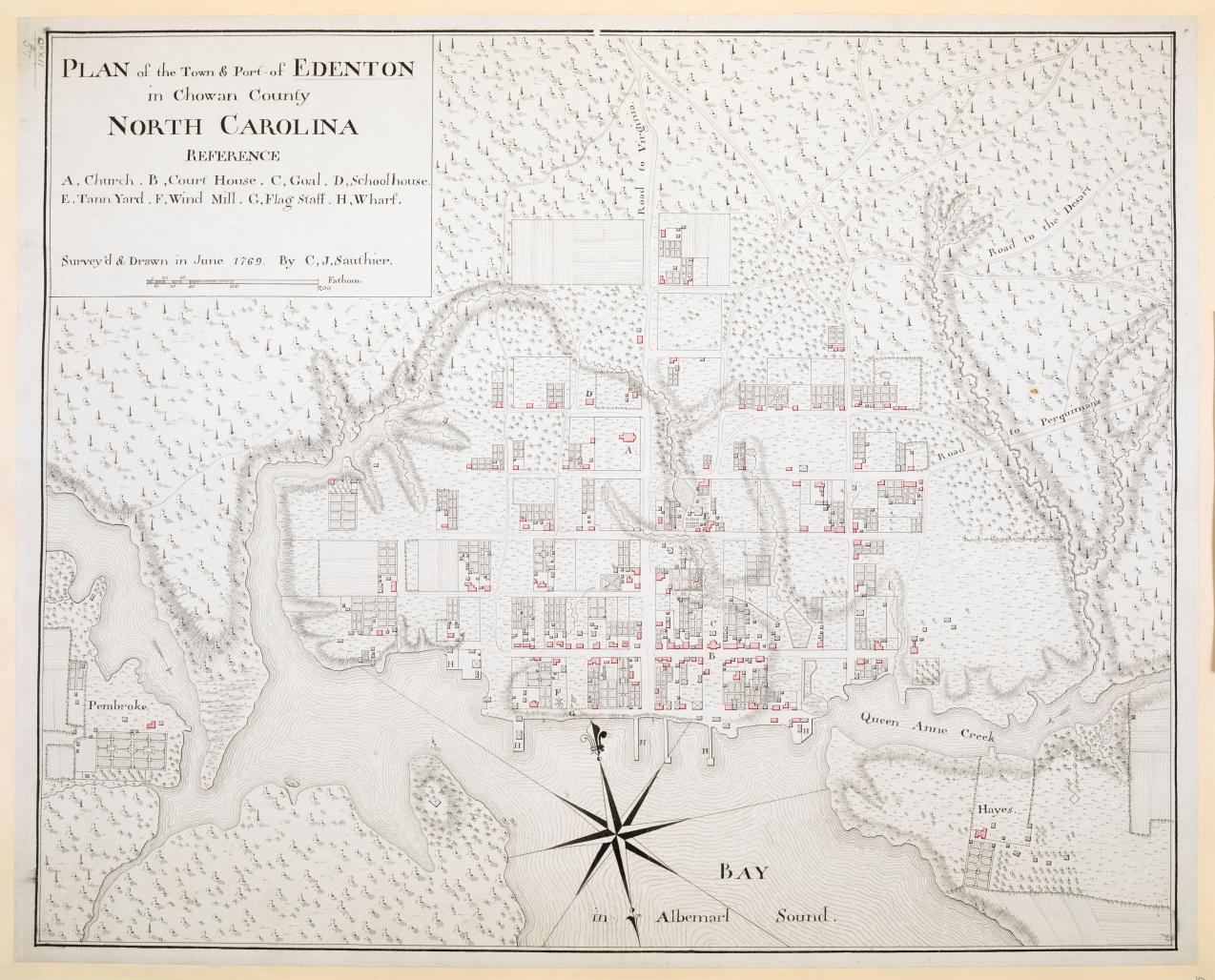
Surveyed and drawn by C. J. Sauthier. Edenton resident Joseph Hewes owned a shipyard in Edenton that produced sloops. Hewes was a signer of the Declaration of Independence, merchant, and businessman.
Courtesy British Library Collection and Norman B. Leventhal Map and Education Center at the Boston Public Library
Cornelius Moore operated a shipyard in Perquimans County in 1771. Shipbuilding also occurred in Hyde, Northampton, and Bertie Counties.
During the Revolutionary War era, enslaved peoples and freed Black sailors sided with the British or the Americans aboard privateers, schooners, fishing vessels, and ferries.
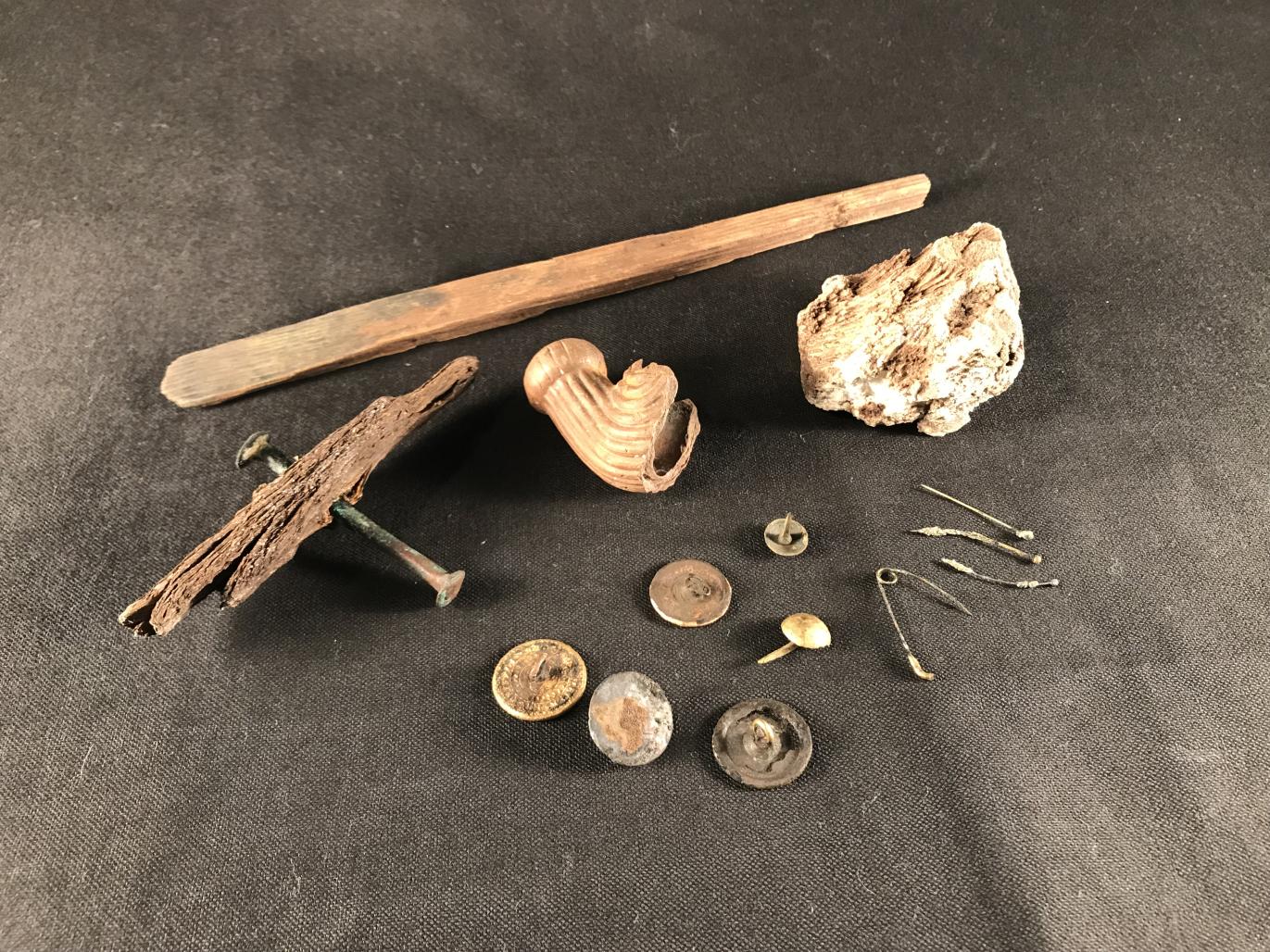
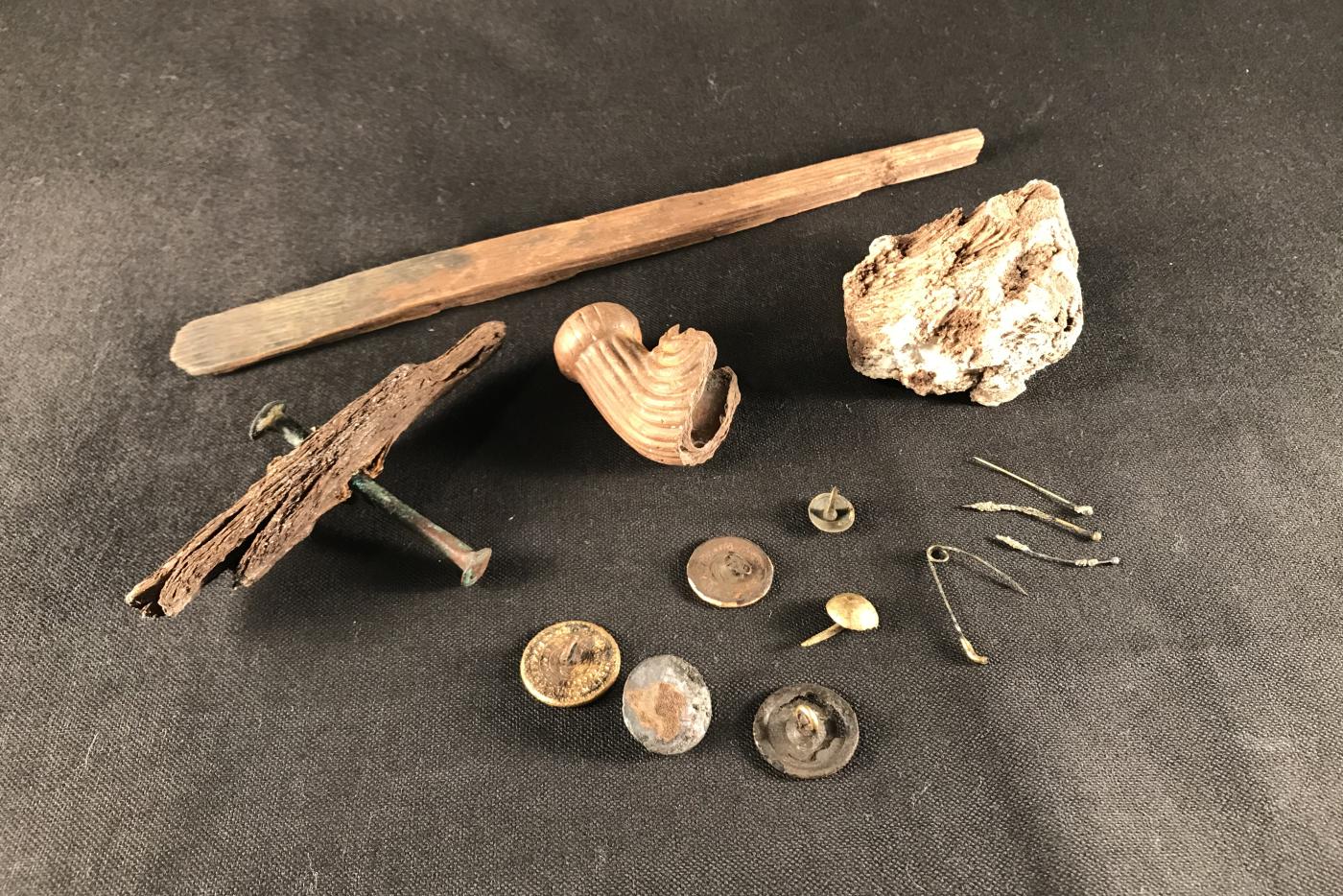
Artifacts—including a pipe bowl fragment, coral, wooden stir paddle, button backs, tacks, and pins—were recovered from underwater archaeological excavations at the MacKnight shipyard site in Currituck County. The site produced 18th- and 19th-century artifacts.
These objects are on loan from the North Carolina Office of State Archaeology, Underwater Archaeology Branch.
“From this yard I have launched a ship into 14 feet of water, upon sliding boards not more than 30 in length, the whole run did not exceed 25 feet; and from top of the keep blocks to the surface of the water was a fall of little more than two feet.”
—Thomas MacKnight, 18th-century shipyard owner
Archaeological excavations have been conducted in Currituck County of a shipyard, leading many researchers to believe it is the site of Thomas MacKnight’s Shipyard. His business built ocean-going and coastal-usage vessels from the 1760s to the 1770s. Enslaved persons served as caulkers, carpenters, and blacksmiths at the shipyard. MacKnight, a known Tory, left his North Carolina home and returned to England in 1776.
Research for this article was taken from several sources, including the book Shipbuilding in North Carolina, 1688–1918 by William Still, PhD, and Richard Stephenson, PhD.
Read this article as well in Museum of the Albemarle's in-house publication, The Gateway, Fall/Winter 2025 | Vol. 51 via ISSUU today!